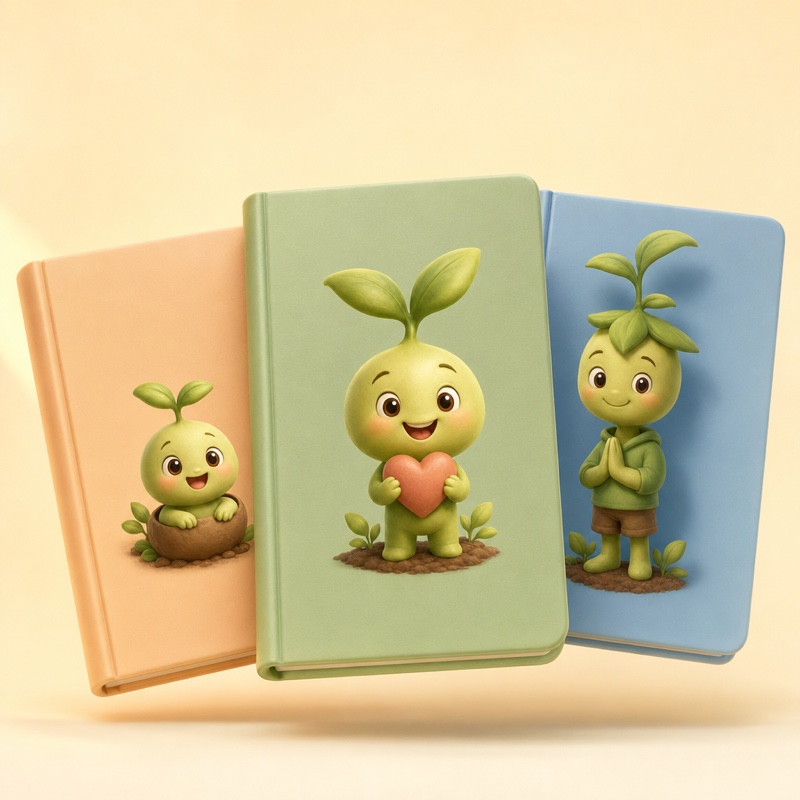
What Is a Christian Devotional for Kids?
Direct answer: A Christian devotional for kids is a short, daily-ish reading that pairs one Bible verse with a story, a prayer, and an open question. It is not a Sunday School curriculum and not a storybook Bible. It is the soft, five-minute pause between the last bedtime story and prayer time, designed to introduce scripture to kids too young for a formal Bible study.
Most parents come looking for a devotional because they already sense that a chapter book about theology is too heavy for a preschooler, and a picture Bible is too long for a Tuesday night. A devotional lives in between. It respects that your child has an eight-minute attention window and that you have about six of those minutes left before bath water goes cold.
Good kids devotionals share three qualities. First, they are short enough to finish before your child gets restless. Second, they anchor every reading to a single Bible verse in a translation your child can actually understand. Third, they end with a question that turns bedtime into a small conversation instead of a mini-sermon.
How a devotional differs from a storybook Bible
A storybook Bible retells scripture in narrative order — from Creation through the resurrection to Revelation. Popular examples include the Jesus Storybook Bible by Sally Lloyd-Jones and the Read-Aloud Bible Storybook by Ella Lindvall. A devotional, on the other hand, is theme-first: one topic per day (courage, kindness, gratitude), a verse to match, applied to daily life. Storybook Bibles teach the arc of scripture. Devotionals teach the rhythm of scripture. Most families use both.
How a devotional differs from Sunday School curriculum
Sunday School curriculum is teacher-led, ordered by lesson plan, and often includes a workbook or coloring page. A devotional is home-led, requires no plan, and does not track completion. Sunday School is designed for a classroom of ten kids sitting in a semicircle. A devotional is designed for one child sitting on your lap.
I bought my first Christian devotional when my daughter turned three. It was 300 pages, printed in tiny gray text, and had zero pictures. She was asleep by page two. That is when I started asking a different question: what would a devotional look like if it were designed for a three-year-old, not a thirty-three-year-old parent? Every page in God's Little Sprout tries to answer that question.
For a deeper age-by-age look at what to buy first, jump ahead to devotionals by age. For a walkthrough of what a good page actually contains, read the 5-minute format. For a broader parenting resource, Focus on the Family's family devotions library is a solid neutral starting point.
Why 3-8 Is the Sweet Spot for Kids Devotionals
Direct answer: Ages 3 to 8 is the sweet spot for kids devotionals because brain development, receptive language, and spiritual openness all overlap in this window. Kids can sit through five minutes of story, they can memorize a short verse, they still believe in wonder without needing proof, and they have not yet shifted their attention primarily to peer approval — which typically happens around age nine.
Child developmental psychology roughly divides this window into two phases. Ages three to five are marked by concrete thinking, hero-follower orientation, and very high receptivity to story. A child this age will accept "Jesus is a good friend" as easily as "the moon is round" — both are true things adults say. Ages six to eight introduce logical questions ("but why does God let sad things happen?"), while wonder still holds. This is the last window where a kid will happily sit for a bedtime story without negotiating for extra screen time first.
After age eight, the shift starts. Attention moves toward peer social approval, questions grow more abstract, and family rhythms compete harder with sports, playdates, and homework. Kids can still start devotionals at nine or ten — they just need a different tone (see by age). But if you are asking when to plant the seed, the answer is: as early as you can, and no later than seven or eight.
What research suggests about faith formation in childhood
Christian family research organizations, including the Barna Group, have documented for years that faith habits formed before age thirteen show stronger persistence into adulthood than habits introduced later. Barna's own longitudinal work highlights the childhood window as the most formative period for spiritual practice. This does not mean older kids cannot form faith habits — they absolutely can — only that the ground is softest earliest. A five-minute nightly devotional at four does more compounded work than the same habit starting at fourteen.
What does not work in this age range
- Long readings. Anything past five minutes at ages three to six loses them mid-verse.
- Archaic language. The King James Version reads at a twelfth-grade level. Kids under eight decode roughly none of the "thee" and "thou" vocabulary.
- Fear framing. Devotionals that lean on judgment, punishment, or fear-of-consequences motivation produce compliance, not faith. Kids remember the fear, not the verse.
- Performance framing. "Did you pray today or not?" turns devotionals into a chore checklist. The point is rhythm, not compliance.
The 5-minute format section below explains what actually works structurally at this age.
Which Bible Translation Should You Read to Kids Ages 3-8?
Direct answer: The best Bible translation for reading aloud to kids ages 3 to 8 is the NIrV (New International Reader's Version), which reads at a third-grade level and is used by most major Christian kids publishers. The ICB (International Children's Bible) is a strong runner-up. NLT works for the older end of the range (6 to 8) as kids begin self-reading. Avoid KJV and ESV for this age group — they read too high.
Not every English Bible was written to be read aloud to a four-year-old. Some were translated for pulpit preaching. Some were translated for scholarly study. The NIrV was translated specifically as a simplified NIV for younger readers, and it has become the de facto standard for Christian kids devotionals from major publishers like Zonderkidz.
Here is how the major English translations compare on reading level for kids ages 3 to 8:
| Translation |
Reading level |
Best for ages 3-8 |
Notes |
| NIrV (New International Reader's Version) |
3rd grade |
Read-aloud 3-8 |
Simplified NIV. Doctrinally aligned with NIV. Standard for kids devotionals. |
| ICB (International Children's Bible) |
3rd grade |
Read-aloud 5-9 |
First English translation ever done specifically for children. |
| NLT (New Living Translation) |
6th grade |
Self-read 7-8 |
Thought-for-thought translation. Warm and readable. |
| ESV (English Standard Version) |
8th-10th grade |
Later self-read (10+) |
Formal equivalence. Less accessible for young kids. |
| KJV (King James Version) |
12th grade |
Not recommended |
Archaic vocabulary decodes poorly for kids under eight. |
| The Message |
Varies |
Supplement only |
Interpretive paraphrase, not literal. Fine as a second voice, not primary. |
Why NIrV became the standard for kids devotionals
Three practical reasons. First, the third-grade reading level matches the read-aloud comprehension band for kids ages three to eight, meaning the verse actually lands rather than washing past them. Second, its doctrinal alignment with the NIV gives it wide acceptance across Protestant denominations. Third, it is freely available on BibleGateway and on Bible.com, so parents can pull up any verse on any phone without buying an extra print Bible. When Zonderkidz — the largest Christian kids publisher in North America — standardized on NIrV, most other publishers followed. You can read Biblica's own overview of the NIrV for a translation-philosophy explanation.
When to switch translations
Around age eight or nine, most kids are ready to move from NIrV to NLT or the NIV. The signal is when your child stops asking "what does that word mean?" during the reading. If they are decoding words on their own and the flow is not breaking, it is safe to move up. Do not switch prematurely just because a translation sounds more "grown-up" — the point is comprehension, not aesthetics.
In God's Little Sprout, I chose NIrV for the English edition because I wanted kids to hear scripture — not adults reading over their heads. My oldest was four when I read her the Psalm 139 NIrV rendering and she said, "Wait, God made me on purpose?" That is what a translation working for a four-year-old sounds like.
For a broader comparison, BibleGateway's translation comparison tool lets you preview the same passage across every major English version side by side.
The 10 Essential Themes Every Kids Devotional Should Cover
Direct answer: A well-rounded kids devotional for ages 3 to 8 covers ten essential themes: God made me, God as loving Papa, Jesus as friend, the Holy Spirit as helper, a brave heart, a kind heart, a thankful heart, family love, friendship and difference, and God's big plans. Each theme should anchor to one accessible Bible verse and end with an open question kids can actually answer.
These ten themes cover the developmental and spiritual questions kids actually ask between three and eight. They are drawn from the structure of God's Little Sprout, which was designed around observation of what my own kids — and thirty-plus test readers — actually engaged with over hundreds of bedtimes.
1. God Made Me
Anchor verse: Psalm 139:14 (NIrV) — "How you made me is amazing and wonderful." Why it matters: Identity is the first theological question kids sense before they can name it. "Am I okay as I am?" A devotional on identity plants the answer before anxiety can take root.
2. God Is My Papa
Anchor verse: Psalm 103:13 (NIrV) — "A father is tender and kind to his children." Why it matters: For kids, "God the Father" only makes sense if it is translated into felt safety. Papa language keeps the Father theology warm rather than hierarchical.
3. Jesus, My Friend
Anchor verse: John 15:15 (NIrV) — "I do not call you servants anymore. I have called you friends." Why it matters: Kids relate to friend better than lord. Both are true; friend meets them at their developmental door.
4. The Spirit Helps Me
Anchor verse: John 14:26 (NIrV) — "The Holy Spirit will teach you all things." Why it matters: The Holy Spirit is the hardest person of the Trinity to explain to a five-year-old. "Helper" is the on-ramp.
5. A Brave Heart
Anchor verse: Psalm 56:3 (NIrV) — "When I am afraid, I will trust in you." Why it matters: Kids are scared of things. Naming fear openly and pairing it with trust is more useful than pretending fear does not happen.
6. A Kind Heart
Anchor verse: Ephesians 4:29 (NIrV) — "Don't let any evil talk come out of your mouths. Say only what will help." Why it matters: Kindness is not a rule; it is a muscle. Devotionals give kids language for what kind sounds like.
7. A Thankful Heart
Anchor verse: 1 Thessalonians 5:18 (NIrV) — "Give thanks no matter what happens." Why it matters: Gratitude is countercultural in a consumer environment. Practicing it at four is easier than starting at fourteen.
8. Family of Love
Anchor verse: Colossians 3:13 (NIrV) — "Forgive one another." Why it matters: Siblings fight. Parents lose patience. Family is where forgiveness is first practiced — a devotional makes the language explicit.
9. Friends and the World
Anchor verse: Galatians 3:28 (NIrV) — "You are all one in Christ Jesus." Why it matters: Kids notice difference by age four. Framing difference as gift rather than threat matters early.
10. God Has Big Plans
Anchor verse: Jeremiah 29:11 (NIrV) — "I know the plans I have for you." Why it matters: Kids under eight do not yet worry about the future the way adults do — but they hear the word "plan" and receive it as safety. The seed lands.
A great devotional for this age also gives each theme a real prayer — two lines a four-year-old can actually repeat — and a question that opens rather than closes conversation. If any theme is missing entirely from a book you are evaluating, that is worth noticing. If a theme is present but ends on judgment or fear, that is a red flag for this age range (see why we avoid fear framing).
How to Start a Bedtime Devotional Routine That Actually Sticks
Direct answer: To start a bedtime devotional routine that sticks past week two, replace the last bedtime story with the devotional (do not add extra time), read it exactly as written without adding commentary, ask the closing question without forcing an answer, pray for fifteen seconds, and give yourself permission to skip nights. Four or five nights a week is the target, not seven.
Most bedtime devotional routines fail for the same reason: parents try to add ten minutes to an already-packed evening. That is a recipe for resentment on night three and abandonment by week two. The routine that actually works is a substitution, not an addition.
Step 1 — Pick a slot you already control
Do not try to add devotional time to bedtime. Replace the last picture book of the existing routine with the devotional. Same time. Same lamp. Same bed. Your child's body already associates that context with story time — you are just changing the content of the last three minutes.
Step 2 — Read the devotional. Do not teach it.
Read the page exactly as written. Do not add commentary. Do not quiz. Do not extend into a mini-sermon. The story is doing the theological work already. Your job is delivery, not exegesis.
Step 3 — Ask the closing question. Do not force an answer.
Every good kids devotional ends with an open question. If your child says "I don't know," that is fine. If they change the subject to the class hamster, that is fine. If they answer, listen. The question exists to give them the option, not the obligation.
Step 4 — Pray the prayer together
Or let your child pray. Or just say Amen with them. Fifteen seconds. Done. Prayers for kids do not need to be theologically robust — they need to be repeatable.
Step 5 — Skip days without guilt
Life happens. Fevers happen. Grandparent visits happen. The goal is four or five nights a week, not seven. Perfect is the enemy of habit. If you skip three nights in a row, open the book tonight. The routine forgives you every single time.
Week one we did every night. Week two my daughter had a fever and we skipped three nights. Week three I felt guilty and tried to double up on Saturday morning. That killed it. The reset that worked: "we read the devo on nights that end in Y." No calendar. No streak app. Just — most nights.
For a specific prayer starter kit to pair with your devotional routine, Christian Parenting keeps a solid library of age-appropriate short prayers. And once you are into the rhythm, you may want to look at how devotionals fit into a morning basket if bedtime becomes chaotic in a given season.
The 5-Minute Devotional Format That Works With Wiggly Kids
Direct answer: The 5-minute devotional format that works with kids ages 3 to 8 has five blocks in this order: a 90-second story, a 30-second Bible verse, a 15-second prayer, a 2-minute open question, and an optional physical anchor (a doodle, a hand motion, or a hug). Story goes first, not the verse — story hooks attention; the verse lands after story primes the ground.
You cannot devotional-shame a wiggly four-year-old into sitting still. You can only design a format that respects their attention window. The five-block format below is the structure behind every entry in God's Little Sprout, and it was shaped by watching what my own kids sat through versus what they wandered away from.
Block 1 — Storytime (about 90 seconds)
A four-to-six-sentence story. Usually a small, ordinary moment: a lost toy, a scraped knee, sharing a snack, a first day of school. The story is the hook. It is the reason the child stays on your lap. It should be concrete, not abstract; sensory, not conceptual.
Block 2 — The verse (about 30 seconds)
One verse from the NIrV (or ICB) — not a whole passage. Read it slowly. Read it twice if it is short. Do not explain it. The story you just read did the framing work already; the verse is now the landing.
Block 3 — The prayer (about 15 seconds)
Two lines. Ends in Amen. Written in language a four-year-old could repeat if they wanted to. Something like: "Jesus, thank you for being close today. Help me be brave tomorrow. Amen." That is enough.
Block 4 — The open question (about 2 minutes)
Not a quiz question. An open, conversational question. "When did you feel brave today?" "Was there a moment today you felt God was close?" "What is one kind thing you saw today?" The point is to give the child language for interior life — not to test comprehension.
Block 5 — Optional physical anchor
A quick doodle, a hand motion, a hug. Physical anchoring helps some kids retain the theme — especially the ones who cannot sit still. This is optional; if your kid is already zonked from bath and about to sleep, skip it.
Why story first, not verse first
Verse-first is Sunday School energy. It signals "school" to a kid who was expecting bedtime story. Story-first signals "we are still in bedtime rhythm" — and then the verse lands as the punchline of the story instead of as a homework assignment. Order matters more than most parents realize.
What if they ask for another one?
Read another. Never say no to more devotionals. But do not push for more if they are drifting off. Two on Monday, zero on Tuesday, one on Wednesday — that is the rhythm working, not failing.
Devotionals by Age: Toddler, Preschool, and Early Elementary
Direct answer: Kids devotionals should scale by developmental stage. Ages 2 to 3 need board books with 2-3 sentences per spread and heavy repetition. Ages 4 to 5 are the sweet spot for the full 5-minute format — story, verse, prayer, question. Ages 6 to 8 can handle 7-minute readings with slightly longer Bible verses and optional journaling prompts as they begin self-reading.
Ages 2-3: Board book territory
Very short. Two or three sentences per two-page spread. Concrete images, warm palette, minimal text. Repetition is a feature, not a bug — toddlers ask for the same three books on repeat because repetition is how their brains encode. Board book format also survives toddler hands (paper pages do not). Good picks for this age: Danielle Hitchen's Baby Believer board book series (Bible Basics, Psalms of Praise, and others), and companion "little seeds" board books to any of the ages 3-8 devotional lines you plan to grow into.
Ages 4-5: The sweet spot
This is where the full 5-minute format lives. Story + verse + prayer + question, read aloud — the child does not self-read yet. Illustrations should carry the theme visually alongside the words. Reading level should match NIrV (third grade). This is the exact target range God's Little Sprout was written for: 4- and 5-year-olds sitting on a lap, book on a duvet, lamp on low.
Ages 6-8: Early self-reading
Your kid can start reading small parts of the devotional themselves. The reading can stretch to seven minutes. Bible verses can be a little longer — whole verses instead of half-verses. If your child likes writing, this is where a "Talk about it" journal prompt starts working. Some kids will grab a devotional off the shelf on a Saturday morning and read it alone — that is a beautiful sign the habit has landed. Devotional aesthetics can shift slightly older too: fewer cartoon-style illustrations, more watercolor or lettering.
| Age band |
Format |
Duration |
Best translation |
| 2-3 years |
Board book, 2-3 sentences per spread |
1-2 minutes |
NIrV or paraphrase |
| 4-5 years |
Full 5-minute format, read-aloud |
3-5 minutes |
NIrV (ideal) |
| 6-8 years |
Extended format, partial self-read |
5-7 minutes |
NIrV or NLT |
If you are gifting a devotional to a family whose kids span the range (say, a 3-year-old and a 7-year-old), pick the 4-5 sweet-spot book and let the older sibling "help read" — that gives both kids something to do.
Interdenominational Devotionals: What They Are and Why They Matter
Direct answer: An interdenominational Christian devotional is one whose doctrine focuses on the shared essentials of the Christian faith — the Trinity, the authority of the Bible, Jesus as Lord, grace, and love of neighbor — while intentionally avoiding denominational specifics like baptism mode, eschatology timing, or church polity. This makes it usable across Protestant traditions and, in most cases, comfortable for Catholic families too.
Interdenominational devotionals matter more than most parents realize. Kids grow up in mixed-denomination extended families all the time: a Catholic grandma, a Baptist mom, a nondenominational church home, cousins in a Pentecostal congregation. A devotional that leans hard on one tradition's distinctives will feel alienating to half the household reading it. An interdenominational devotional lets everyone read the same book to the same kid without stepping on each other's theology.
What interdenominational devotionals include
- The Trinity (Father, Son, Holy Spirit) as one God
- The Bible as authoritative scripture
- Jesus as fully God and fully human, and as Lord
- Grace as the shape of God's love for us
- The call to love neighbor and love God
What interdenominational devotionals intentionally leave out
- Baptism mode debates (immersion vs sprinkling vs age of accountability)
- Eschatology timing (pre-, mid-, or post-tribulation rapture views)
- Cessationism vs continuationism (spiritual gifts today or not)
- Church polity (elder-led vs congregational vs episcopal governance)
- Communion theology (memorial vs real presence)
When interdenominational is the right fit for your family
- Mixed marriage where spouses come from different denominational backgrounds
- Homeschool co-op with multiple traditions represented
- Grandparents from a different denomination who read to your kids
- You are still finding your own denominational fit and do not want to lock a child in prematurely
When you actually want denominational-specific content
There are good reasons to pick denominational-specific devotionals sometimes. Catholic families raising kids in the sacramental tradition may want catechism-shaped material like Baltimore Catechism for Kids. Lutheran families may want small-catechism-shaped readings. Reformed families may want covenant-shaped devotionals. If you are deep in a tradition and want the scaffolding, that is legitimate. If you are not, interdenominational is safer.
God's Little Sprout is intentionally interdenominational. I am a Christian mom from Brazil raised in a mixed-denomination extended family — grandma Catholic, mom Baptist, cousins Pentecostal. This book is what I wish they had all felt safe reading to me.
Christian Devotional Books as Gifts: Baptism, Easter, Christmas
Direct answer: A Christian devotional makes an excellent gift for baptism or dedication (choose hardcover with inscription page), Easter baskets (compact paperback works well as anti-candy), Christmas stockings (gift-wrapped hardcover), and grandparents-to-grandchild moments (premium hardcover for multi-year use). The rule: match format durability to how many years the book is likely to be used.
Devotionals gift well because they are one of the rare gift categories where the receiver returns to the object hundreds of times. A stuffed animal gets loved for a season. A devotional gets opened three or four nights a week for years.
Baptism or dedication gift
Best format: hardcover edition, ideally with an inscription page in the front where the giver can write a note, the child's name, and the date. Durability matters — a hardcover survives a decade of toddler grip. Good picks: Sally Lloyd-Jones's Jesus Storybook Bible (hardcover), God's Little Sprout hardcover edition, or Danielle Hitchen's Baby Believer board book set for babies at the youngest end of dedication age.
Easter basket gift
Devotionals are a lovely anti-candy addition to Easter baskets. A small paperback fits inside a basket alongside a small stuffed animal or wooden toy. Consider: Louie Giglio's Indescribable, God's Little Sprout paperback, or a themed Easter devotional if you can find one that focuses on gratitude and joy rather than the more theologically dense passion narrative (which some kids find heavy at four or five).
Christmas or stocking stuffer
Compact hardcover with gift-wrapping feel. Good candidates: The Rhyme Bible Storybook, Little Kids First Big Book of God, or God's Little Sprout hardcover. Stocking stuffers can be shorter format board books for the youngest siblings.
Grandparents' gift for grandchild
Premium hardcover, personal inscription, format that will survive five years of use. Grandparents often want a gift that becomes a keepsake — a devotional inscribed on a birthday or baptism becomes an heirloom. Pair the book with a handwritten letter tucked inside, not just a gift card.
For the mechanics of choosing the right hardcover edition or paperback, see the paperback editions page for God's Little Sprout options.
Using Devotionals in Homeschool
Direct answer: In homeschool, a devotional works best as the "morning basket" anchor — the first thing the day opens with, before math or phonics. Five minutes of devotional at the start of the school day ties the week's Bible verse to the rest of the curriculum and creates a consistent spiritual rhythm your kids can carry into life whether or not you continue homeschooling forever.
The homeschool "morning basket" concept — popularized by educators like Sarah Mackenzie and Pam Barnhill — groups together the short, connective, everyone-together subjects at the start of the school day: read-aloud, poetry, hymn, prayer, devotional. It is the "come together as a family" moment before individual subjects break kids into their own work.
Sample weekly homeschool rhythm
- Monday: Devotional + Bible verse memorization (start the week)
- Tuesday: Devotional + drawing or handicraft tied to the theme
- Wednesday: Devotional + related storybook Bible passage read-aloud
- Thursday: Devotional + hymn learning tied to the theme
- Friday: Devotional + narration to parent (child retells the week's theme in their own words)
The genius of this rhythm is that the devotional is doing the connective work: it becomes the thread that ties Bible memorization, hymn, storybook Bible, and narration together across the week. For more on homeschooling with faith integration, HSLDA keeps a solid resource library on faith-formed homeschooling.
When Your Kid Pushes Back on Devotionals (And Why It Is Actually OK)
Direct answer: When a kid pushes back on devotionals, do not treat it as a spiritual crisis. Kids reject reading time for all sorts of reasons — they are tired, they want a different book, they are testing autonomy. Respect the "no" once. If they say the book is boring, switch books. If they say they do not believe in God, thank them for telling you and keep loving them. Age-6-to-8 questioning is healthy, not apostasy.
Every parent hits this moment eventually. Your kid, who used to snuggle up excited for the devotional, now says "no, not tonight." The temptation is to interpret this theologically. Do not. Interpret it developmentally first.
- If they say "no, not tonight" — respect it. Try again tomorrow. One night off is not a crisis.
- If they say the book is boring — the book might genuinely be a tone-mismatch. Switch to a different devotional and see if engagement returns.
- If they say "I don't believe in God" — thank them for telling you, keep loving them, and do not panic. Kids ages six to eight ask hard questions as a healthy part of cognitive development. This is not the moment for apologetics. It is the moment for calm, warm presence.
- If they say they want to pray with the other parent instead — celebrate it. This is not rejection; it is preference.
My daughter said "I don't want to" at five. We stopped for two weeks. She came back to it because the book stayed on her nightstand and eventually she wanted the story again. Never forced. The book being visible was enough.
Try 7 Free Devotionals — Delivered by Email
Direct answer: The best way to test whether a kids devotional will actually work for your family is to try seven days of it. Below is a free email series that sends one sample devotional per day from God's Little Sprout, formatted in the exact 5-minute structure described in this guide. No spam, unsubscribe anytime, and no obligation to buy anything.
Enter your email and pick your child's age — you will get the first devotional in your inbox within a few minutes. Read it tonight. If the tone works, come back and buy the book. If it does not, unsubscribe with one click and no hard feelings.
Get 7 Free Devotionals — One per Day
A printable PDF plus daily email samples straight from God's Little Sprout.
Get the 7-day series →
No spam. Unsubscribe anytime.
Frequently Asked Questions
Twenty questions parents actually ask about Christian devotionals for kids ages 3 to 8. If yours is not here, email us and we will add it.
1. What age is best for a Christian devotional?
Ages 3 to 8 is the sweet spot for kids devotionals. Kids in this range are old enough to sit through a five-minute reading and young enough to still be story-hungry and open to wonder.
2. How long should a kids devotional be?
Three to five minutes for ages 3 to 6, and up to seven minutes for ages 7 to 8. Longer than that and you lose them mid-verse.
3. What Bible translation is best for kids?
The NIrV (New International Reader's Version) is the standard for kids ages 3 to 8. It reads at a third-grade level and is used widely by Christian kids publishers. NLT and ICB are also excellent.
4. How often should we do devotionals?
Four or five nights a week is realistic and sustainable. Seven nights with guilt on missed days is worse than five nights consistently.
5. Should I quiz my kid on the devotional?
No. Read the story, ask the open question at the end, and listen. Devotionals are not Sunday School lessons and quizzing turns bedtime into a test.
6. Can Catholic families use interdenominational devotionals?
Yes. If the book focuses on shared essentials such as the Trinity, the authority of the Bible, and love of neighbor, and avoids denomination-specific topics like baptism mode or eschatology timing, Catholic families can use it comfortably.
7. What is the difference between a devotional and a storybook Bible?
A devotional is theme-first, short (typically two pages per day), and daily. A storybook Bible is narrative-first, longer, and read episodically. Most families use both.
8. When do I switch from a kids devotional to a teen devotional?
Around ages 9 to 10, when your child is reading fluently and starting to ask abstract theology questions. That is usually the signal to move up.
9. My kid asks hard questions. Should the devotional answer them?
A good devotional starts conversations, it does not close them. Say "I don't know either, let's think about it." Modeling curiosity is the point.
10. Can dads read devotionals too?
Yes. Many kids devotionals are written in a mom-voice tone, but dads reading them aloud works just as well. Kids remember the voice more than the tone.
11. What if my kid falls asleep during the devotional?
They just drifted off with a soft, faith-filled thought as their last waking moment. That is a win, not a failure.
12. Do I need to buy the physical book?
Physical books are warmer for bedtime because they signal "no screens." Kindle works for travel. Most families use both formats depending on setting.
13. What if we skip two weeks?
Restart tonight without guilt. Open the book. That is it. The routine forgives you every single time.
14. How do I pick a devotional gift for a 3-year-old at baptism?
Choose a hardcover edition with an inscription page in the front, from a publisher-recognized author. Hardcover survives the toddler years and becomes a keepsake.
15. Are Christian devotionals for kids scary?
Good ones are not scary. Look for authors who avoid judgment-focused language, hellfire framing, and fear-based motivation for ages 3 to 8.
16. Can we do devotionals in the morning instead of bedtime?
Yes. Some families do morning devotionals as part of a homeschool "morning basket." The key is anchoring it to an existing rhythm, whichever time of day that is.
17. Do devotionals replace Sunday School?
No. Devotionals complement Sunday School. Sunday School gives structured teaching once a week, devotionals give short daily rhythm at home.
18. What if my child has different faith questions than the devotional covers?
That is the devotional working. Follow their question, not the book's. The book primed the conversation, and now your child owns it.
19. How do I use devotionals in a mixed-faith family?
Pick an interdenominational devotional that avoids denominational specifics, or read separately with each parent. Both approaches work for real mixed-faith households.
20. What if I am not sure what I believe?
Reading a devotional to your kid is not a doctrinal statement. It is telling them "there are big stories worth hearing." That is enough. You can figure out the rest of your own faith on your own timing.
Trusted resources referenced in this guide