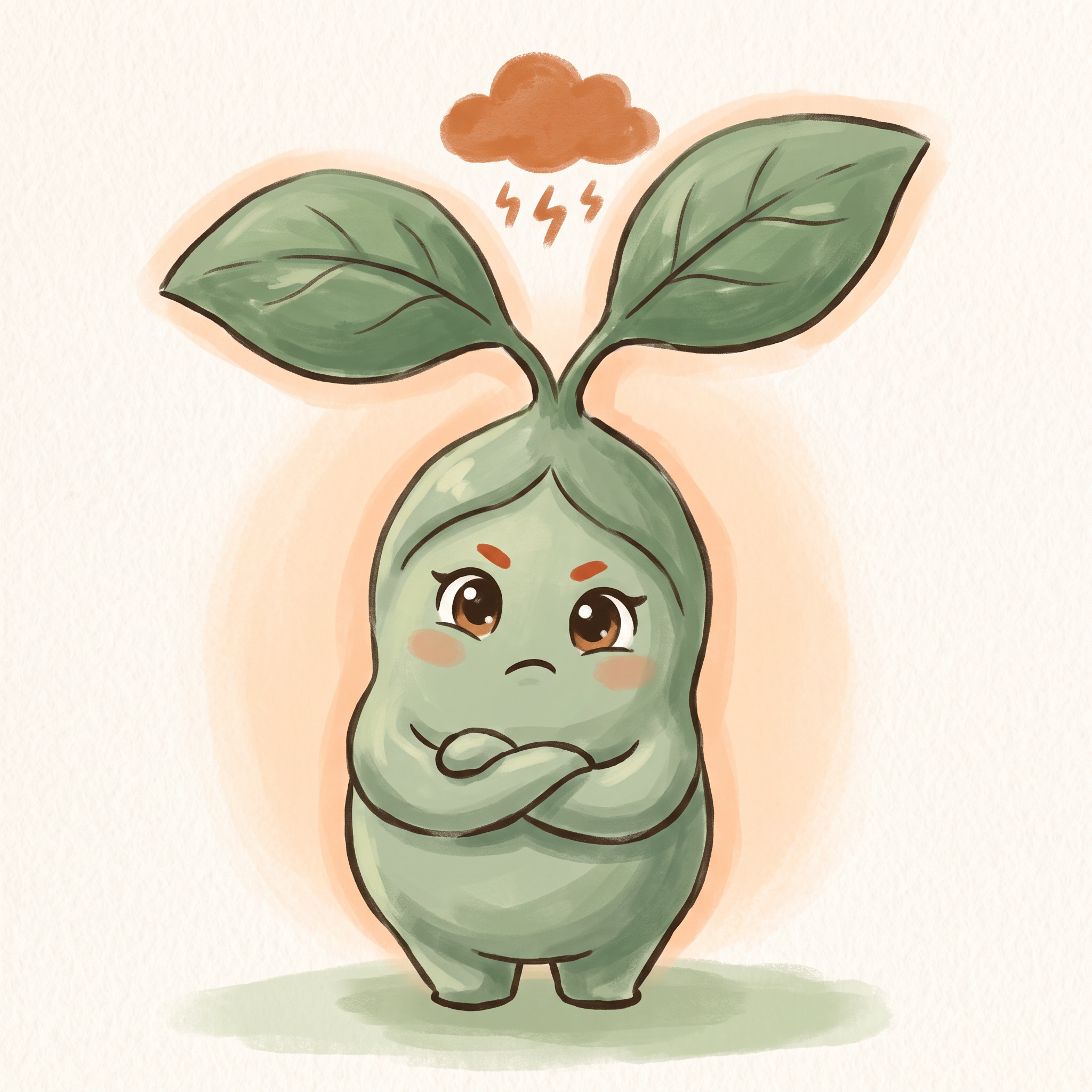
Direct answer: A Christian book about emotions for kids is a devotional or picture book that names feelings (fear, joy, sadness, anger, love) and pairs each with a Bible verse or scripture story. For ages 3-8, the best books cover five to seven emotions with age-appropriate framing, use NIrV translation for the verses, and let kids name what they feel without turning it into a lesson. Faith and emotional vocabulary are stronger when they are built together.
Kids do not lack emotions. They lack words for emotions. A three-year-old feels angry and can only communicate the feeling by hitting the couch. A five-year-old feels jealous and can only communicate it by refusing to share. A seven-year-old feels sad and can name it as sad, but does not yet know that sad is okay to feel and that God sits inside it. A Christian book about emotions gives kids all three: the word, the permission, and the presence of God inside the feeling.
This post covers what a good emotions book for kids should do, the five feelings that matter most for ages 3-8, the Bible verses that anchor each, and five books that qualify.
Why Faith and Emotional Vocabulary Belong Together for Kids
Some parents worry that talking about emotions "too much" softens kids. The opposite is true. Kids who cannot name their feelings act them out. Kids who can name their feelings can move through them. And kids who see God as present inside every feeling — sad, angry, jealous, joyful — grow up with an intimacy with God that survives adult hardship.
Scripture is full of emotions. David laments in the Psalms. Jesus weeps at Lazarus's tomb. Nehemiah rejoices when the wall is rebuilt. Elijah is depressed under the broom tree. Mary treasures things in her heart. The Bible does not treat emotions as weaknesses to overcome. It treats them as evidence that we are made in the image of a God who feels. A kids devotional about emotions is teaching this truth in miniature.
The night my four-year-old melted down for what felt like the fourteenth time that week, she finally sat on my lap sobbing and said, "I don't know what I feel." That is when I realized: she needed the word. She had the feeling. She was waiting for me to give her the word. The next devotional we read was one that named "frustrated." She used the word for the next six months.
The 5 Emotions That Matter Most for Ages 3-8 (With Anchor Verses)
A good Christian emotions book for this age band covers at least these five, with a verse and a story for each. Every verse below is in NIrV. All of them are memorizable before kindergarten.
| Emotion |
Anchor verse (NIrV) |
Scripture story to pair |
| Fear | Psalm 56:3 — "When I am afraid, I will trust in you." | David facing Goliath |
| Sadness | Psalm 34:18 — "The Lord is close to those whose hearts have been broken." | Jesus weeping at Lazarus |
| Anger | Ephesians 4:26 — "Do not let the sun go down while you are still angry." | Jonah being angry at Nineveh (kid-friendly version) |
| Joy | Nehemiah 8:10 — "The joy of the Lord is your strength." | Zacchaeus meeting Jesus and giving away his money |
| Love | 1 John 4:19 — "We love because he loved us first." | Jesus calling the children close (Mark 10:14) |
Some Christian emotions books add jealousy (Cain and Abel, adapted gently), disappointment (David's lament psalms), and hope (Jeremiah 29:11). All three are appropriate for kids 5+.
What Makes a Good Christian Emotions Book for Kids
1. Names the emotion clearly
Titles like "When You Feel Scared" or "It's Okay to Be Sad" are direct and land better than euphemistic titles. A four-year-old needs the word. Give it to her.
2. Uses a scripture story, not just a verse
A story shows the emotion happening to someone real. Jesus wept. David was scared. Kids remember stories longer than verses. The best books combine both.
3. Avoids fixing the emotion
A weak Christian emotions book says "When you feel sad, remember God loves you and you will feel better!" That is not how sadness works. A strong one says: "When you feel sad, God sits with you inside the sadness. He does not rush you to feel differently."
4. Ends with a prayer that lets the child speak
"God, I feel scared right now. Please stay with me." That is a full prayer. It teaches the child that God can hear the truth.
5. Uses NIrV or ICB translation
Emotional vocabulary in age-appropriate Bible translation reinforces the reading level match. See our guide on why NIrV works for ages 3-8.
5 Christian Books About Emotions for Kids (Ages 3-8)
#1
God's Little Sprout — God's Little Sprout Editorial Team
Not marketed as an "emotions book" but the 100-devotion structure covers fear, sadness, anger, joy, love, jealousy, disappointment, and hope across the ten thematic sections. Includes named-emotion devos on "It's Okay to Be Scared" (Devo #43) and "Even When You're Mad" (Devo #19). NIrV. Ages 3-8.
#2
The Feelings Book by Todd Parr (secular companion)
Not Christian but pairs well as an emotional vocabulary primer. Read it first for the words, then use a Christian devotional to add faith context. Ages 3-6.
#3
God, I Feel Sad! series by Michelle Nietert
Named-emotion titles: "God, I Feel Sad!" "God, I Feel Angry!" and more. Each book covers one feeling with scripture, story, and prayer. Ages 4-8.
#4
Indescribable — Louie Giglio
Wonder-based devos that indirectly build emotional vocabulary through awe. Not a "feelings book" but expands the emotional palette to include reverence and wonder — feelings kids need language for too. Ages 5-8.
#5
Sad Sometimes: A Book About Big Feelings (Christian editions)
Picture book format naming sadness without rushing to fix it. Pair with a devotional for daily rhythm. Ages 3-6.
The full emotional-vocabulary devotional
God's Little Sprout weaves emotional vocabulary through 100 devotions across ten themes, in NIrV, for ages 3-8. Each named-emotion devo gives your child words and God at the same time.
See it on Amazon
How to Use a Christian Emotions Book in Real Life
The book is not the moment. The moment is when your kid is already inside the feeling. The book is preparation.
- Read the emotion devo on a calm night. Not during the meltdown. On the calm night, name the feeling and let her know that word exists.
- Reference the word during the next hard moment. "You are feeling frustrated. Remember we read about that." Kids do not connect emotion words to their own experience immediately. You bridge it.
- Say the verse together after the hard moment. Not during. When the storm has passed, say the anchor verse and give her a small hug. That is the anchoring.
- Reread the same devo when the feeling comes back. Emotions cycle in kids. Repetition of the same devo builds a stable emotional-scriptural language.
For related reading on courage and fear specifically, see Christian book about fear for children and Christian book about courage for children.
Frequently Asked Questions
What is a Christian book about emotions for kids?
It is a devotional or picture book that names and normalizes a range of feelings (fear, joy, sadness, anger, love) and pairs each with a Bible verse or a story from scripture. The goal is to give kids the vocabulary to name what they feel and to trust that God is present in every emotion.
At what age can kids benefit from Christian emotional-vocabulary books?
Ages 3 through 8 is the ideal window. At 3, kids start naming basic feelings ("happy," "sad"). By 5, they can name fear, jealousy, and disappointment. By 7, they can talk about frustration, loneliness, and hope. A good Christian emotions book scales across this range.
How does faith build emotional intelligence in kids?
Faith gives kids a stable frame for what they feel. Scripture names God as one who feels alongside us — Jesus wept, David lamented, Nehemiah rejoiced. When a child sees emotions in the Bible, she stops seeing her own emotions as evidence something is wrong.
What Bible verses talk about emotions kids can understand?
Psalm 56:3 for fear. Psalm 34:18 for sadness ("The Lord is close to those whose hearts have been broken"). Nehemiah 8:10 for joy. Ephesians 4:26 for anger ("Do not let the sun go down while you are still angry"). All work well in NIrV for ages 3-8.
Are 'feelings books' the same as 'emotions devotionals'?
Similar but not identical. Feelings books are usually secular picture books teaching emotion words. Emotions devotionals add scripture and prayer, framing feelings inside a faith conversation. A Christian family might use both.